
























DH NEWS SERVICE
Kishtwar, Jul 19
The Indian Army has successfully concluded a two-week Electrician and Welding Course for unemployed youth at Village Malar in Kishtwar district, reaffirming its commitment to promoting skill development, self-reliance and sustainable livelihood opportunities in remote areas of Jammu and Kashmir.
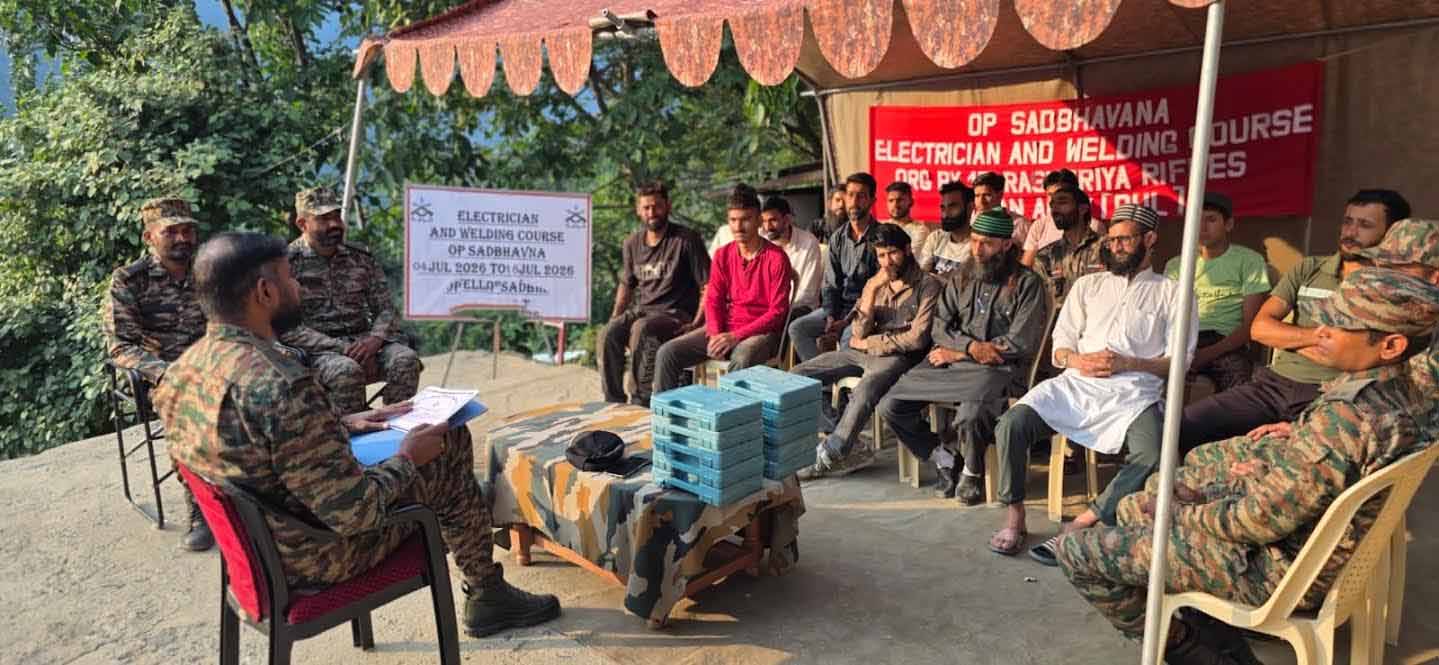
The training programme, conducted from July 4 to July 18, was organised as part of the Army’s ongoing community outreach initiatives aimed at empowering young people through vocational education and practical technical training.
The initiative sought to enhance the employability of local youth by equipping them with industry-relevant skills that can help them secure jobs or start their own ventures.
A total of 12 unemployed youth from Village Malar and nearby areas participated in the programme. Throughout the two-week course, the trainees received hands-on instruction in basic electrical work, welding techniques, safety measures and the proper handling of essential tools and equipment.
The training was designed to provide participants with practical knowledge that could be applied in various employment sectors, including construction, maintenance, fabrication and small-scale businesses.
The instructors focused on developing technical competence while also encouraging discipline, confidence and problem-solving abilities among the participants. Emphasis was placed on safe working practices and the importance of maintaining professional standards while carrying out electrical and welding tasks. Army officials said the programme was intended not only to improve technical skills but also to create new opportunities for self-employment and entrepreneurship among rural youth.
By providing vocational training close to their homes, the initiative aimed to reduce barriers to skill acquisition and help young people become financially independent.
At the conclusion of the course, a closing ceremony was organised in which all 12 participants were awarded Certificates of Merit in recognition of their successful completion of the training.
In addition to the certificates, each trainee received a portable toolkit containing essential equipment to help them begin working independently or pursue further employment opportunities in their chosen field.
The distribution of toolkits was intended to enable the participants to immediately apply the skills they had acquired during the course. Army officials expressed hope that the practical support would encourage the trainees to utilise their newly gained knowledge for productive employment and income generation.
The participants expressed their gratitude to the Indian Army for organising the programme and making quality vocational training accessible within their own locality. They said the course had improved their technical knowledge and boosted their confidence to explore employment and self-employment opportunities. Several trainees noted that receiving both training and essential tools would help them begin earning a livelihood without having to make significant initial investments.
Residents of Village Malar and surrounding areas also appreciated the initiative, describing it as a meaningful effort to address unemployment and create opportunities for young people in remote regions. They acknowledged the Indian Army’s continued contribution to community welfare through educational, vocational and developmental programmes that benefit local residents.
The Indian Army has been organising similar skill development initiatives in different parts of Jammu and Kashmir as part of its people-centric outreach efforts. These programmes focus on empowering youth through vocational education, encouraging entrepreneurship and supporting socio-economic development in rural and border areas.
Officials said such initiatives play an important role in creating sustainable livelihood opportunities while strengthening the bond between the Army and local communities. The successful completion of the Electrician and Welding Course at Malar is expected to help the trained youth build better careers and contribute to the economic progress of their families and the region.

