

















Chandimandir, Oct 26
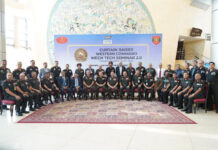
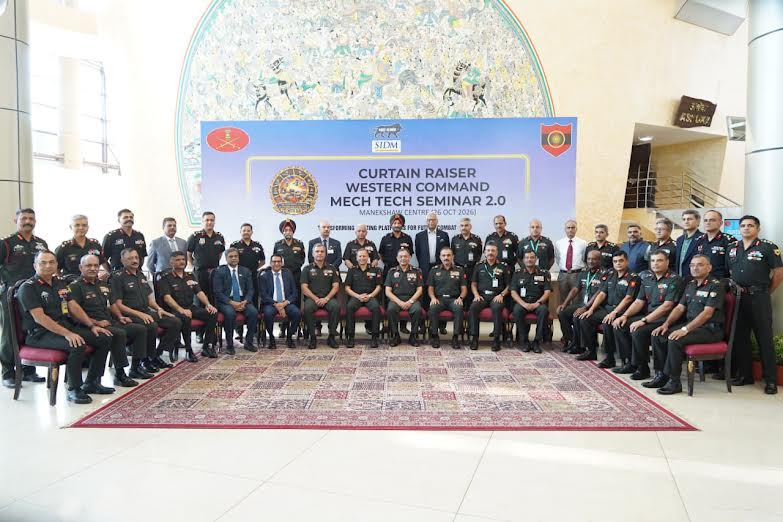
Western Command of the Indian Army will organise the Mechanisation Technology Seminar 2.0 (MTS 2.0) on December 14 and 15, 2026, at Chandimandir Military Station, with a focus on modernising existing military platforms and enhancing the combat capabilities of mechanised forces. The seminar, themed “CHAKRA – Transforming Existing Platforms for Future Combat,” will bring together representatives of the Indian Army, defence industry, academia and other stakeholders to explore innovative technological solutions for emerging battlefield requirements. Lieutenant General Pushpendra Singh, General Officer Commanding-in-Chief, Western Command, inaugurated the curtain raiser for the seminar at the Manekshaw Centre in New Delhi on October 26. The event was organised by Western Command in collaboration with the Society of Indian Defence Manufacturers (SIDM), highlighting the importance of cooperation between the armed forces, domestic defence manufacturers and academic institutions in advancing India’s military modernisation efforts. An initiative of Western Command, MTS 2.0 aims to enhance the operational effectiveness of mechanised forces by transforming existing military platforms into technologically advanced, capable and future-ready combat systems. The initiative seeks to identify opportunities for upgrading and adapting existing equipment to meet the changing demands of modern warfare, while making effective use of indigenous technological capabilities.
The seminar will focus on several key areas, including combat capability enhancement, harnessing technology, adaptability, kinetics, refurbishment and Atmanirbharta. These themes are intended to address operational challenges faced by mechanised formations and identify practical solutions that can strengthen their performance in diverse battlefield conditions. Particular emphasis will be placed on translating operational capability gaps and requirements into clearly defined Problem Definition Statements (PDS), enabling industry and academic experts to develop targeted and implementable technological solutions.
The curtain raiser outlined the broader vision and major areas of discussion for the forthcoming seminar.
It highlighted the need for technology-driven modernisation, civil-military collaboration and self-reliance in strengthening India’s indigenous defence capabilities. The interaction also provided an opportunity for military users, industry representatives, researchers and other stakeholders to exchange views on the modernisation of existing platforms, indigenous innovation and emerging operational requirements.
Mechanised forces play a significant role in modern military operations, where mobility, firepower, protection and rapid response are essential to achieving operational objectives. As battlefield conditions evolve with the growing application of advanced technologies, the ability to upgrade existing platforms and integrate new capabilities has become increasingly important. The proposed seminar will provide a focused forum to examine how technological improvements can enhance the effectiveness, adaptability and survivability of mechanised systems.
The emphasis on refurbishment and the transformation of existing platforms also reflects the importance of optimising available military resources while incorporating contemporary technological advancements. Greater collaboration between the Army and domestic defence manufacturers can help identify suitable upgrades, encourage indigenous research and development, and reduce dependence on imported solutions. Academic institutions are also expected to contribute through research, innovation and technical expertise.
MTS 2.0 reflects the Indian Army’s continued commitment to capability enhancement, technological transformation and self-reliance in defence. By bringing together military users, industry and academia, the seminar aims to bridge the gap between operational requirements and technological development. The initiative is expected to support the development of practical solutions that can strengthen the combat readiness, resilience and operational effectiveness of mechanised forces in an increasingly complex and technology-driven battlefield environment.

