














new delhi, Jul 19
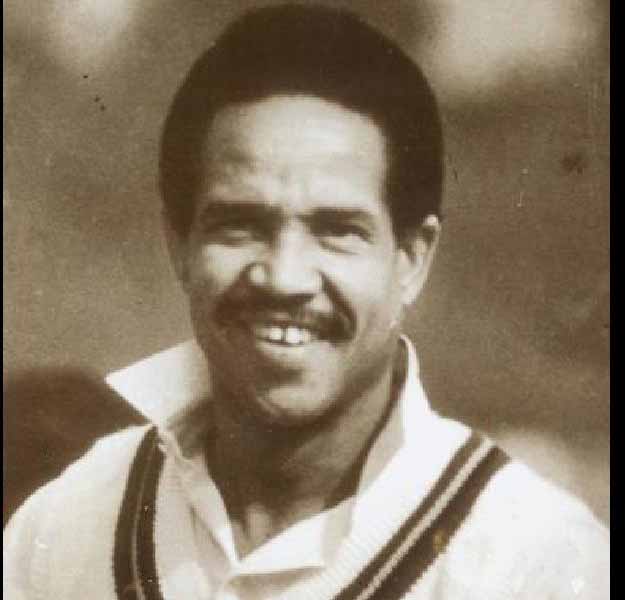
Garry Sobers, widely revered as cricket’s greatest all-rounder whose unmatched grace, athleticism and cavalier spirit lit up grounds and defined an era, died in his native Barbados on Friday. He was days short of his 90th birthday.
Sobers was the most complete cricketer. A lissome and destructive left-handed batsman, a left-arm bowler equally skilled at fast-medium, orthodox spin and wrist-spin, and a brilliant fielder in any position, the West Indian was named one of the five leading cricketers of the 20th century by the sport’s Wisden Almanack.
Donald Bradman, cricket’s greatest batter, famously described Sobers as “a five-in-one cricketer” and “the greatest all-round cricketer I ever saw”.
Perhaps nature itself felt a need to acknowledge that superhuman ability to master every facet of the game — Sobers was born with two extra fingers, one on each hand. He removed them himself as a boy, using catgut and a sharp knife. Sobers himself would play down the importance of his natural talent. “People call me a genius. I don’t know much about geniuses,” he said late in his life.
“But I do believe that what I achieved was not just because of the ability that I was born with but also because I worked hard.”
He partied hard, too, and had a penchant for gambling. His teammates vouched that during a Lord’s Test in 1973, aged 37, Sobers stayed up all night drinking, arrived at the crease with a hangover and stomach cramps, and smashed an unbeaten 150.
For all his off-field exploits, records chased him. At 21, he scored 365 not out against Pakistan in 1958, setting a world record that stood for 36 years. Ten years later, he became the first man to hit six sixes in an over in a first-class match, for Nottinghamshire against Glamorgan at Swansea. When he retired after 93 Tests, he had the then highest aggregate runs at 8,032 to go with his 235 wickets and 109 catches. He had scored 26 hundreds — second only to Bradman’s then-record 29 — at a batting average of 57.78.
A huge part of those batting exploits came, astonishingly, at No. 6 — a position forced on him by his bowling load that left him too tired to come in at the top.
Garfield St Aubrun Sobers was born in St Michael, Barbados, on July 28, 1936, the fifth of six children.
His father, a seaman working in the Canadian merchant navy, died when German forces sank the boat. Garfield was five years old.
Like most West Indian cricketers of his time, Sobers learnt his cricket playing on the road or on the beach from the age of eight, the ball fashioned out of a lump of tar, the bat from a piece of fence.
If the sun melted the tar ball, a rock wrapped in cloth would serve as a replacement.
His first-class debut for Barbados came at 16. He played his first Test in 1954.
In 383 first-class matches, Sobers made more than 28,000 runs and took more than 1,000 wickets. But the man cared little for records, focusing instead on helping his team win.
“Six sixes are not good cricket,” he said after his Swansea feat received worldwide acclaim. “It was an occasion where we were looking for quick runs.” That spirit of adventure — and the weakness for taking a flutter — perhaps induced him to declare and set England, as West Indies captain in the 1968 Port of Spain Test, 215 to win in 165 minutes.
West Indies lost by seven wickets, causing an uproar in the Caribbean. But Sobers was unrepentant.
“That series was so boring,” he said. “The first three Tests had been drawn. I was so fed up and this wasn’t what I thought of as cricket”.
In 1970, he played cricket in apartheid Rhodesia (now Zimbabwe), generating an international backlash. Calls grew in the Caribbean to sack him as West Indies captain.
“I had not realised the deep feelings of the West Indian people in this issue of Rhodesia,” he wrote to the West Indies Cricket Board. “If I had known or thought of these matters, I would never have gone to Rhodesia.”
Sobers retained the captaincy.
He received several invitations to play in apartheid South Africa but refused them all, he wrote in his memoir. In 1991, as the country’s system of racial segregation ended, he briefly met Nelson Mandela, who named him and Bradman as his favourite cricketers.
Trevor Bailey, his first victim as a bowler in Tests, once said: “He has, quite simply, been the greatest of all time, the most complete all-rounder ever.” Sobers played two Test matches at Eden Gardens — 1958-59 and 1966-67, including an unbeaten 106 in his first innings which was famous for Rohan Kanhai’s 256.
In 1975, Sobers was knighted. “There are those who claim I was destined to do well in life because I arrived in this world with two extra fingers, as though there was something mystic about it,” Sobers recalled. “I wasn’t bothered. They didn’t inhibit me in any way at all.”
Sunil Gavaskar termed him as “the greatest cricketer on earth”. “No words can ever do justice to Sir Garfield Sobers… He was everything we dream of becoming when we pick up the bat or ball as kids. Memories keep flooding back and that’s what I will be holding forever close to my heart,” Gavaskar said.

