























new delhi, April 26
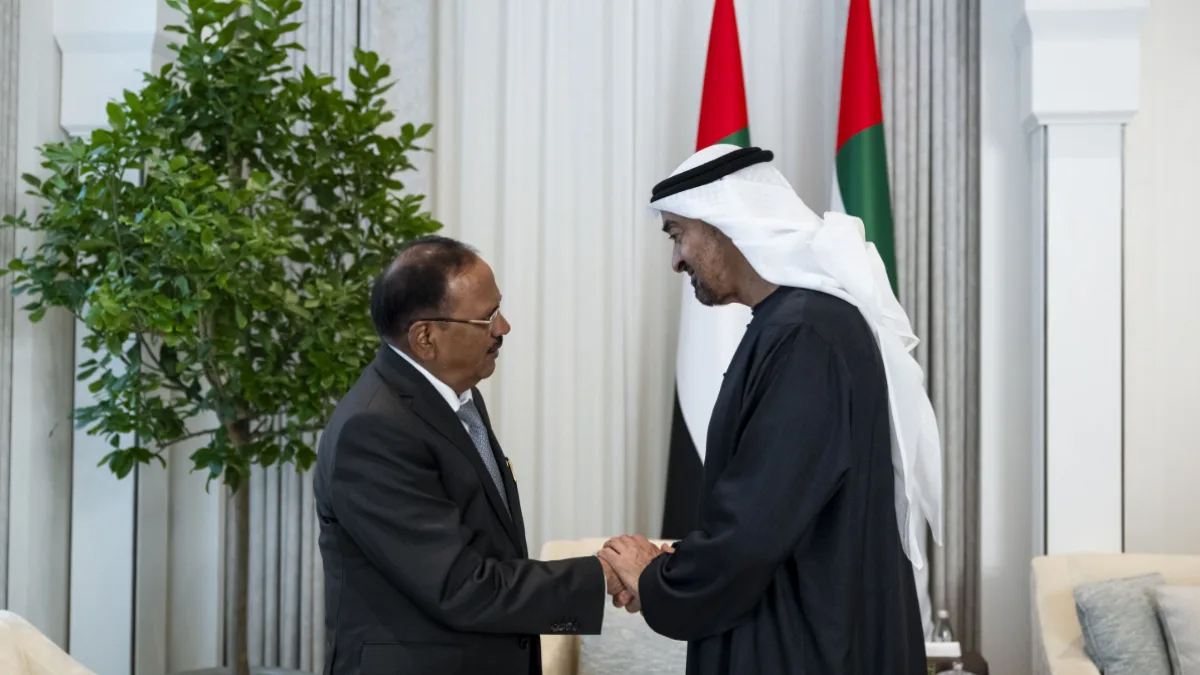
India’s National Security Advisor Ajit Doval held talks with Sheikh Mohamed bin Zayed Al Nahyan in Abu Dhabi on Saturday, with discussions focused on regional stability and the evolving security situation in West Asia. The meeting comes at a time of heightened geopolitical tensions following the fallout of the ongoing confrontation involving Israel and Iran.
During the meeting, both sides reviewed key security concerns and assessed the broader regional environment, which continues to be shaped by uncertainty and conflict. The discussions also touched upon economic interests and the importance of coordination between India and the United Arab Emirates as instability in the region begins to affect trade, energy flows, and overall security dynamics. The engagement reflects the growing strategic importance of India-UAE relations, particularly in the context of shared concerns over regional peace and stability. Doval’s visit to the UAE follows closely on the heels of his recent trip to Saudi Arabia, which was part of India’s ongoing diplomatic outreach to key Gulf nations. The outreach is being carried out under the broader direction of Narendra Modi, with an emphasis on strengthening ties and ensuring sustained engagement with countries that play a critical role in regional and global affairs.
During his visit to Saudi Arabia, Doval met senior members of the Saudi leadership, including ministers responsible for energy and foreign affairs, as well as top security officials. According to the Ministry of External Affairs, these discussions were aimed at enhancing bilateral cooperation and exchanging views on pressing regional developments. The engagements were seen as part of a broader effort to align perspectives on issues affecting both countries.
At an inter-ministerial briefing, MEA spokesperson Randhir Jaiswal confirmed that Doval held high-level meetings with his Saudi counterparts. These included discussions with the Saudi Energy Minister, Foreign Minister, and his security counterpart. The talks were described as constructive and useful in deepening mutual understanding on regional challenges while reinforcing bilateral ties. Officials indicated that the discussions in Saudi Arabia revolved around four key pillars that underpin the India-Saudi relationship. These included ensuring stable supply chains amid disruptions to global trade routes, addressing security concerns in the Strait of Hormuz and the wider Persian Gulf, enhancing intelligence sharing, and expanding economic cooperation. These areas are considered crucial in maintaining stability and safeguarding shared interests, particularly as regional tensions threaten critical maritime routes and energy supplies. The diplomatic engagements come at a time when the spillover effects of regional conflicts are being felt across several countries, including Lebanon, Syria, and Yemen. These developments have added to the complexity of the security environment, prompting countries like India to adopt a cautious and balanced approach in their foreign policy. New Delhi has consistently called for restraint among all parties involved in regional conflicts. It has emphasised the need to protect civilians and has advocated for resolving disputes through dialogue and diplomatic channels. India’s position reflects its broader commitment to stability and its interest in preventing further escalation that could have far-reaching consequences.
The government has also highlighted the importance of maintaining engagement with key regional stakeholders, including Israel, Palestine, and Iran. Such engagement is seen as essential for safeguarding India’s strategic and economic interests, particularly in a region that remains vital to its energy security and trade.
India’s diplomatic outreach to the Gulf assumes added significance given the presence of a large Indian diaspora in the region. Millions of Indian nationals live and work in Gulf countries, contributing significantly to both local economies and remittance flows back to India. Ensuring their safety and well-being remains a priority for the government, especially during periods of heightened tension.

