

























new delhi, May 20
US President Donald Trump on Tuesday claimed that Iran was eager to strike a deal with Washington and asserted that the ongoing conflict in West Asia would end “very quickly”, even as political pressure intensified in the United States over the possibility of a broader military confrontation involving Tehran.
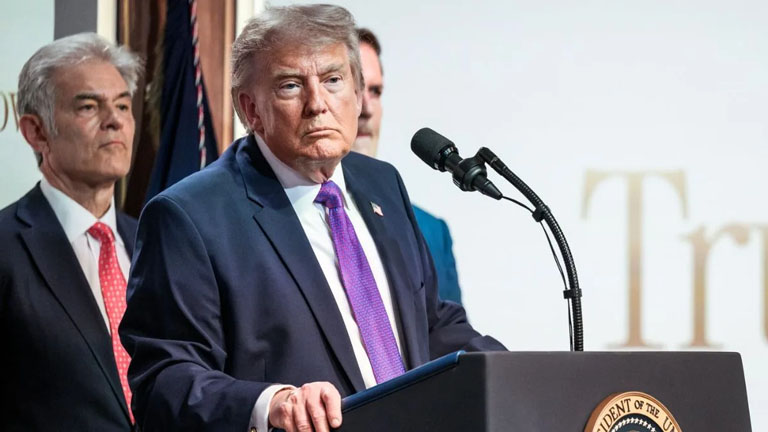
Speaking during a press conference, Trump projected confidence that diplomatic negotiations with Iran could still succeed despite heightened tensions in the region. He also predicted a major decline in global oil prices, arguing that the international market currently had abundant supply and that fears of a prolonged energy crisis were exaggerated.
“There’s so much oil out there, they’re going to come plummeting down. We’re going to end that war very quickly. They want to make a deal so badly,” Trump said while responding to questions about the situation in West Asia and the impact of tensions on the global economy.
The remarks came amid growing concern in Washington about the risk of the United States becoming directly involved in another major military conflict in the Middle East. Earlier in the day, the US Senate approved a procedural measure aimed at restricting Trump’s authority to launch military action against Iran without congressional approval.
According to CBS News, senators voted 50-47 in favour of discharging the resolution from committee, allowing it to proceed for debate in the Senate. The move reflected rare bipartisan concern over the possibility of military escalation with Iran and the constitutional limits of presidential war powers.
The resolution was introduced by Democratic Senator Tim Kaine and directs the President to remove US armed forces from hostilities involving Iran unless Congress formally authorises military action through a declaration of war or a specific authorisation passed by lawmakers.
Four Republican senators joined Democrats in supporting the measure. Those voting in favour included Susan Collins, Lisa Murkowski, Rand Paul and Bill Cassidy.
The Senate action marked the eighth attempt by Democratic lawmakers to push forward legislation aimed at curbing presidential military authority related to Iran. Supporters of the measure argued that the US Constitution grants Congress the exclusive authority to declare war and that any prolonged military engagement must receive legislative approval.
Democratic Senator Adam Schiff said lawmakers were attempting to restore Congress’ constitutional role in matters of war and peace.
“Today, Senate Democrats once again forced a vote to demand an end to this unconstitutional war,” Schiff wrote in a post on X, formerly Twitter. Independent Senator Bernie Sanders also welcomed the Senate move and said the American public was increasingly opposed to prolonged military interventions overseas. “The American people do not want to spend billions on endless wars. They want to address the enormous crises facing our country. We must end this unconstitutional war,” Sanders stated on X.
The Senate development came only days after Trump revealed that a planned US military operation against Iran had been temporarily halted following appeals from Gulf leaders seeking more time for diplomacy. In a detailed post on his social media platform Truth Social, Trump disclosed that leaders from several Gulf nations had urged him to postpone military action because “serious negotiations” with Tehran were underway.
According to Trump, the request came from Tamim bin Hamad Al Thani, Mohammed bin Salman and Mohamed bin Zayed Al Nahyan.
Trump stated that the United States had originally planned military action against Iran on Tuesday but decided to suspend the operation after Gulf leaders assured Washington that diplomatic channels remained active and productive.
“This Deal will include, importantly, NO NUCLEAR WEAPONS FOR IRAN!” Trump wrote in the post, reiterating his administration’s long-standing position that Tehran must not be allowed to develop nuclear weapons capabilities.
At the same time, Trump warned that the United States remained fully prepared for military action if negotiations failed to produce an acceptable outcome. He stressed that while diplomacy was currently being prioritised, the military option remained available and operational readiness had not been reduced.
“I have instructed Secretary of War Pete Hegseth, the Chairman of The Joint Chiefs of Staff, General Daniel Caine, and The United States Military, that we will NOT be doing the scheduled attack of Iran tomorrow, but have further instructed them to be prepared to go forward with a full, large scale assault of Iran, on a moment’s notice, in the event that an acceptable Deal is not reached,” Trump stated.
The latest developments underline the delicate balance between diplomacy and military preparedness as the United States and Iran continue to navigate rising regional tensions. Political observers believe the coming days will be crucial in determining whether negotiations can prevent a broader conflict in West Asia or whether the situation could escalate into direct military confrontation.
The Senate vote also highlighted increasing divisions within Washington over foreign policy and presidential authority. While Trump has continued to defend his handling of the crisis and insist that Iran is ready for a deal, critics in Congress remain concerned that unchecked executive power could draw the United States into another prolonged conflict in the Middle East without proper legislative oversight.
Analysts say Gulf countries are also playing an increasingly important diplomatic role, as regional leaders seek to avoid instability that could threaten economic growth, oil markets and broader security in West Asia. The outcome of the ongoing negotiations is expected to have major implications not only for US-Iran relations but also for regional stability and global energy markets in the months ahead.

