
























DH NEWS SERVICE
SRINAGAR, May 7
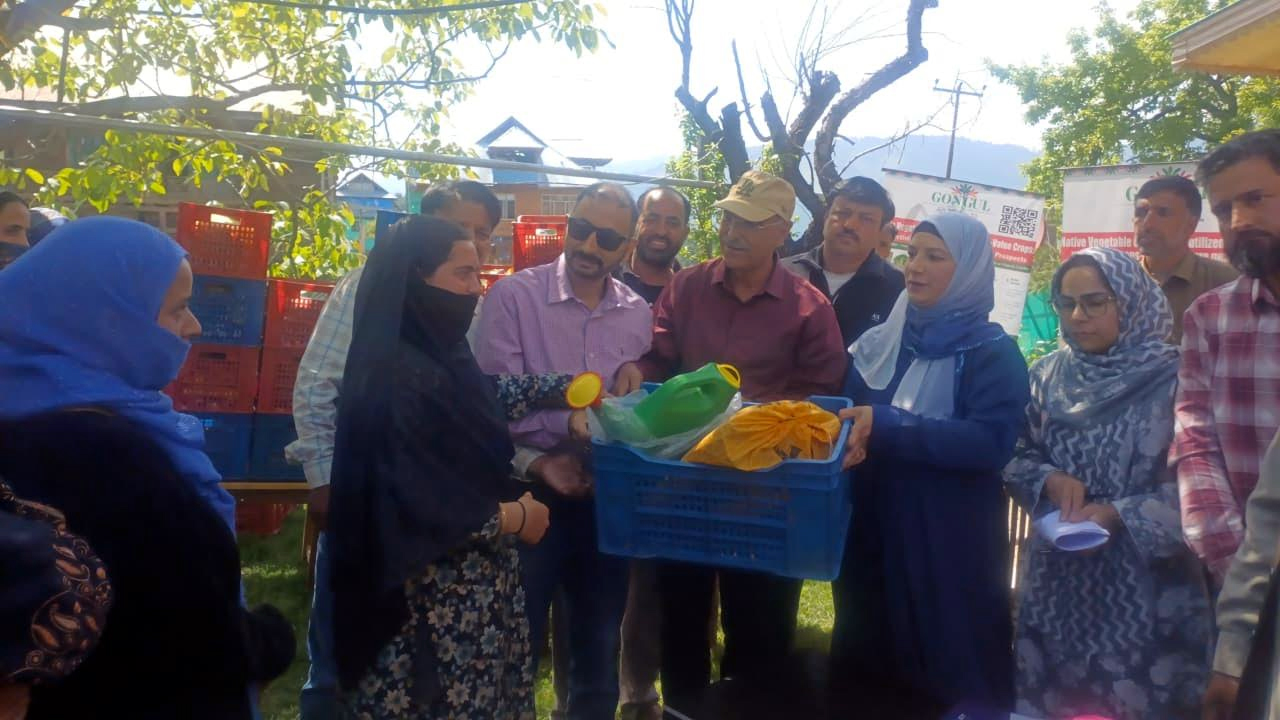
SKUAST-Kashmir, through its Division of Vegetable Science in collaboration with Krishi Vigyan Kendra Kupwara, organized a Mega Technology Demonstration-cum-Input Distribution Programme at Hatchmarg, the High-Altitude Tomato Village (HATV) of the District.
The programme was held under the Tribal Sub Plan (TSP) project titled “Transforming Tribal Agriculture in Kashmir: A Comprehensive Vegetable Development Initiative” sponsored by Indian Council of Agricultural Research.
The programme was aimed at empowering tribal farming communities through scientific vegetable cultivation practices, dissemination of improved technologies, and distribution of quality agricultural inputs.
The initiative focused on transforming the tribal vegetable landscape by promoting sustainable and climate-resilient vegetable cultivation practices in high-altitude areas of Kashmir.
The event was attended by Prof. Ishfaq Abidi, Head, Division of Vegetable Science; Mohammad Iqbal Choudhary, CEO Seeds, SKUAST-Kashmir; Dr. Asima Amin, Assistant Professor, Division of Vegetable Science and Principal Investigator of the TSP Project; and Dr. Mohammad Mudasir Magray, Assistant Professor, Division Vegetable Science.
During the programme, scientists and experts interacted with local farmers and highlighted the importance of advanced vegetable production technologies, improved crop management practices, integrated nutrient management, and scientific approaches for enhancing vegetable productivity in tribal and remote regions. Special emphasis was laid on high-altitude tomato cultivation and sustainable vegetable farming systems suited to the agro-climatic conditions of the area.
Quality seeds, planting materials, and other essential agricultural inputs were distributed among tribal farmers to strengthen vegetable-based livelihoods and improve farm productivity.
The participating farmers appreciated the efforts of SKUAST-Kashmir and KVK Kupwara in reaching out to remote tribal areas with scientific and technological support.
Speaking on the occasion, the experts reiterated that the project aims to enhance the socio-economic condition of tribal farming communities by promoting commercially viable and sustainable vegetable cultivation practices through continuous technical guidance and field-level interventions.
The programme concluded with an interactive session during which farmers shared their experiences and sought expert guidance on various aspects of vegetable cultivation under changing climatic conditions.

