

























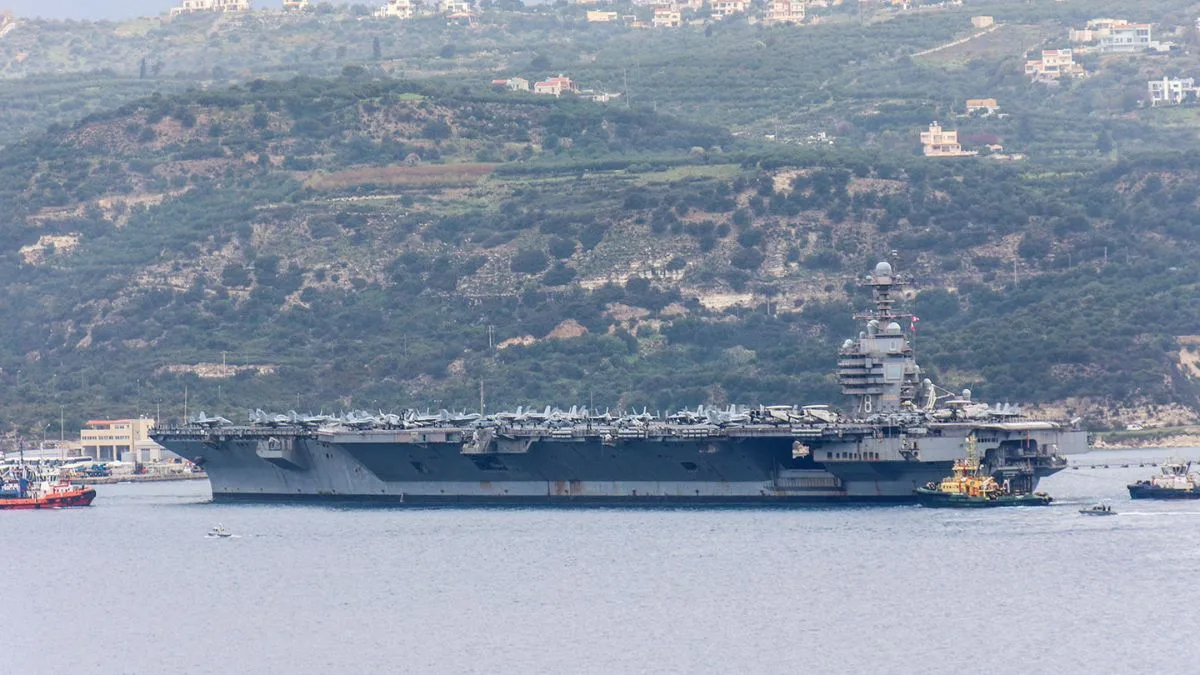
new york The United States is set to reduce its naval presence in West Asia, with one of its most advanced aircraft carriers preparing to exit the region even as President Donald Trump signals no let-up in pressure on Iran and considers fresh military options.
The move comes at a delicate moment. Talks between Washington and Tehran have more or less hit a wall, and the US has only tightened its grip on the Strait of Hormuz, one of the world’s busiest oil routes.
While pulling back a carrier could finally give exhausted crews some breathing room, it also leaves a bigger question hanging: how far can the US keep up the pressure on Iran with fewer assets on the ground?
USS Gerald R Ford set to leave after extended deployment
The USS Gerald R Ford, currently stationed in the Red Sea, is expected to leave the Middle East in the coming days, according to CBS News, citing a senior US official. The carrier is one of three deployed in the region, alongside the USS George H W Bush and the USS Abraham Lincoln.
Its departure will reduce the US naval presence enforcing the blockade on vessels linked to Iranian ports in the Arabian Sea. The Ford’s return also marks the end of a gruelling deployment of 309 days, far exceeding the typical six to seven months.
The extended stint has taken a toll on both crew and vessel. Reports have flagged issues ranging from a laundry room fire that injured sailors to problems with onboard facilities. The carrier is expected to undergo repairs and maintenance once it reaches Virginia around mid-May.
Questions over extended deployment, Pentagon response
The unusually long deployment has drawn scrutiny in Washington. During a congressional hearing, US Secretary of War Pete Hegseth defended the decision, saying, “A tough decision-making process led to the extension,” adding it was done in consultation with the Navy.
The return of the carrier is likely to bring relief to nearly 4,500 sailors who have been deployed for over ten months.
Trump backs blockade, keeps military option open
Even as one carrier prepares to leave, the broader US strategy appears unchanged. Trump has refused to lift the blockade on Iran and has instead asked aides to prepare for a prolonged economic squeeze aimed at curbing Tehran’s nuclear ambitions.
“The blockade is somewhat more effective than the bombing. They are choking like a stuffed pig. And it is going to be worse for them. They can’t have a nuclear weapon,” Trump told Axios.
He also described the blockade as “genius” and ruled out any agreement unless Iran abandons its nuclear programme.
Reports suggest the US sees the blockade as a lower-risk alternative compared to direct military action, though the option of strikes remains on the table if negotiations fail.
New strike plans and Strait of Hormuz strategy under review
According to Axios, CENTCOM Commander Admiral Brad Cooper is expected to brief Trump on possible next steps, including a “short and powerful” wave of strikes targeting Iranian infrastructure.
Other proposals under discussion include taking control of the Strait of Hormuz to ensure uninterrupted commercial shipping, and even a special forces operation aimed at securing Iran’s stockpile of highly enriched uranium. Joint Chiefs Chairman General Dan Caine is also expected to attend the briefing.
Iran holds firm as tensions deepen
A study by the Institute for the Study of War suggests Iran is unlikely to concede ground. Hardline voices within Tehran, including IRGC chief Major General Ahmad Vahidi, are said to be shaping policy, with little internal opposition.
Iran has insisted that the US lift the naval blockade before any discussions on its nuclear programme. Analysts believe Tehran may attempt to reframe its position by involving Oman in a proposal to manage shipping tolls in the Strait of Hormuz, without giving up control.
What the US drawdown could mean
The departure of the Ford signals a tactical shift rather than a strategic retreat. While the US reduces one element of its naval presence, it continues to rely on economic pressure and keeps military options ready.
The blockade is still on, and there’s fresh talk of strikes. Right now, it feels like both sides are digging in, with no real sign of anyone stepping back.

