






















DH NEWS SERVICE
BANDIPORA, Jul 23
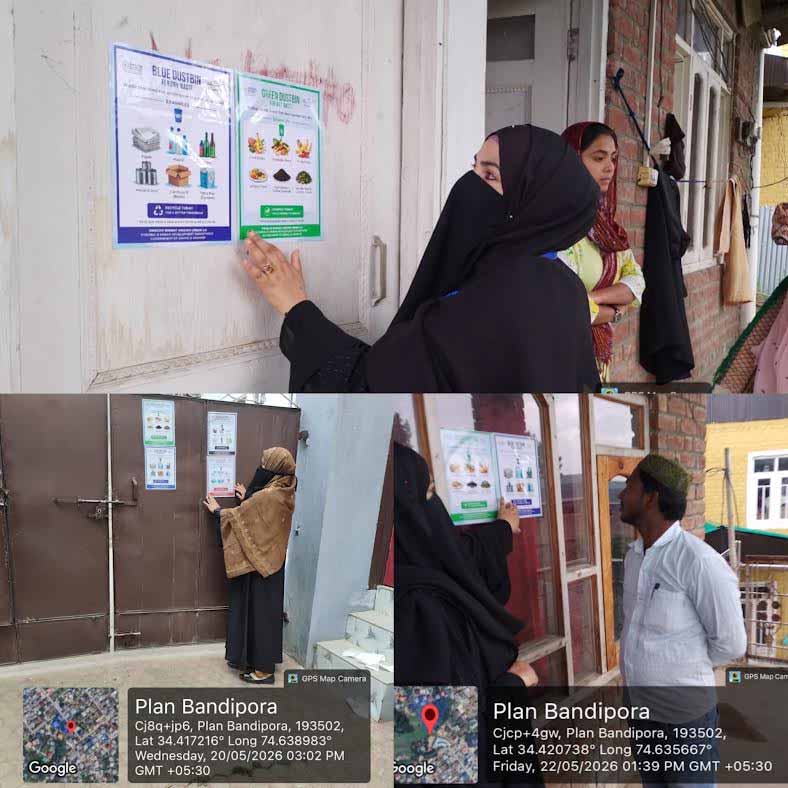
The Municipal Committee Bandipora has launched a large-scale awareness and outreach campaign to promote waste segregation at source under the Swachh Bharat Mission Urban 2.0. The initiative has been undertaken under the directions of the Housing and Urban Development Department with the objective of ensuring effective implementation of the Solid Waste Management Rules, 2026, across the town. As part of the campaign, Community Mobilisers and Swachhata Executives have begun a door-to-door awareness drive, visiting households, commercial establishments and institutions to educate residents about scientific waste management practices. The teams are distributing and pasting instructional waste segregation stickers at homes and prominent waste collection points to encourage proper segregation of household waste before it is handed over for municipal collection.
The campaign seeks to establish a four-bin waste segregation system that enables the separation of different categories of waste at the source. Municipal officials said that segregation at the household level is essential for improving waste collection, transportation and processing while reducing the burden on dumping sites. The initiative is also expected to improve recycling rates, minimise environmental pollution and enhance the safety of sanitation workers handling municipal waste.
During their interactions with residents, the field teams are explaining the purpose of each colour-coded sticker and the type of waste that should be deposited in the designated bins. The blue sticker has been assigned for dry recyclable waste, including paper, plastic, glass bottles, metal cans, cardboard cartons and Tetra Pak containers. Residents are being advised to ensure that all recyclable materials are clean and dry before disposal so that they can be processed efficiently through recycling facilities.
The green sticker has been designated for biodegradable wet waste generated in households. This category includes food leftovers, fruit and vegetable peels, tea leaves, coffee grounds and garden waste such as leaves, grass and other organic material. Municipal officials explained that proper segregation of biodegradable waste can facilitate composting and reduce the quantity of waste reaching landfill sites.
For specialised waste, the campaign introduces a red sticker to guide the disposal of hygiene-related waste.
This category includes sanitary pads, diapers, tissues, wet wipes, cotton and menstrual hygiene products. Residents are being informed that such waste requires separate handling to maintain sanitation standards and ensure the safety of waste collection personnel.
The black sticker has been reserved for household hazardous waste that requires careful disposal. Officials are educating the public about the safe handling of items such as used batteries, expired medicines, thermometers, tube lights, bulbs, chemicals, nail polish and nail polish removers. Proper segregation of hazardous waste, they said, is essential to prevent environmental contamination and health risks.
The Municipal Committee stated that Community Mobilisers and Swachhata Executives will continue visiting all municipal wards over the coming days to ensure maximum public participation in the campaign. Apart from distributing instructional material, the teams are also addressing queries raised by residents regarding waste segregation and municipal collection procedures.
Officials expressed confidence that active public cooperation would help strengthen scientific waste management practices in Bandipora and contribute to achieving the objectives of Swachh Bharat Mission Urban 2.0. The Municipal Committee has appealed to residents, shopkeepers, business establishments and institutions to fully cooperate with the field staff and strictly follow the four-bin waste segregation system. It said that sustained public participation is essential for maintaining cleanliness, improving environmental sustainability and creating a healthier urban environment for future generations.

