

























DH NEWS SERVICE
Leh, jun 17
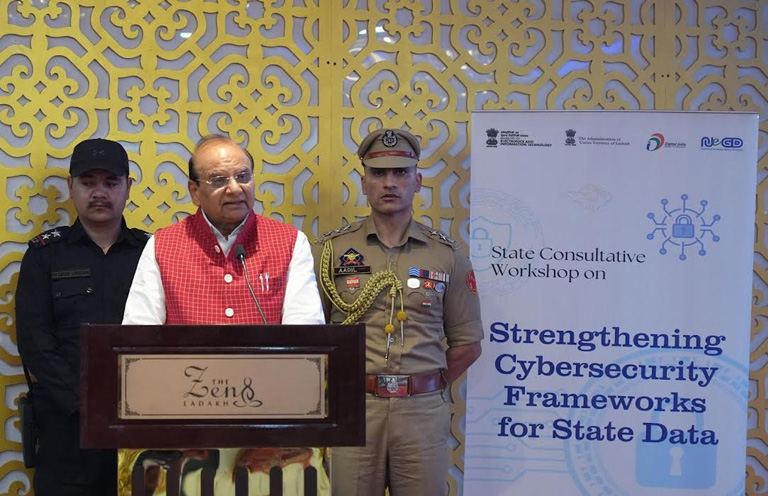
Lieutenant Governor of Ladakh, Shri Vinai Kumar Saxena, today attended the State Consultative Workshop on “Strengthening Cyber Security Frameworks for State Data”, organised as part of a nationwide consultative process initiated by the Government of India to build a robust and resilient framework for protecting government data and digital infrastructure. The workshop is being held in pursuance of the directions of the Hon’ble Prime Minister, who, during the 5th National Conference of Chief Secretaries, emphasised the need for regular and structured inter-governmental dialogue through thematic conferences led by individual ministries. This workshop marks Stage II of the four-stage consultative process.
Addressing the workshop, the Lieutenant Governor observed that Ladakh’s digital footprint is expanding rapidly with increasing adoption of e-Governance platforms, digital payment systems and Artificial Intelligence in government functioning. While digital transformation has significantly improved efficiency and transparency in public service delivery, it has also heightened the risks of cyber threats, including ransomware attacks, data breaches, phishing, social engineering, supply chain compromises and unauthorised access to critical systems.
Emphasising the importance of securing government data, Shri Saxena stated that data held by government departments represents not only administrative records but also the trust that citizens place in public institutions.
“The digital world has no borders and no checkpoints. As Ladakh rapidly embraces digital governance, security and resilience must remain integral components of our digital transformation journey. Protecting citizen data is fundamental to good governance and public trust,” L-G Shri Saxena said. The workshop deliberated upon six key thematic areas essential for strengthening cyber resilience across government systems: risk-based assessments and security monitoring; establishment of Security Operations Centres (SOCs) and State Computer Security Incident Response Teams (CSIRTs); implementation of the Digital Personal Data Protection Act, 2023 and National Information Security Policy and Guidelines; security of State Data Centres and State Wide Area Networks; legacy modernisation through secure-by-design and zero-trust principles; and capacity building through the appointment of Chief Information Security Officers and strengthening cyber awareness and skills.
L-G Shri Saxena stressed that technology alone cannot secure digital systems and highlighted the need for leadership, governance, awareness, skilled manpower and a sense of responsibility at every level of administration. He encouraged all participants to utilise the workshop as a platform for open and constructive exchange of ideas and to develop practical and actionable recommendations that can strengthen collective preparedness against cyber threats.

