

















new delhi, May 3
Union Minister for Petroleum and Natural Gas Hardeep Singh Puri has asserted that Gujarat has emerged as India’s “Energy Capital” as well as the country’s “Natural Gas Gateway,” highlighting the state’s central role in powering the nation’s economic growth and energy security.
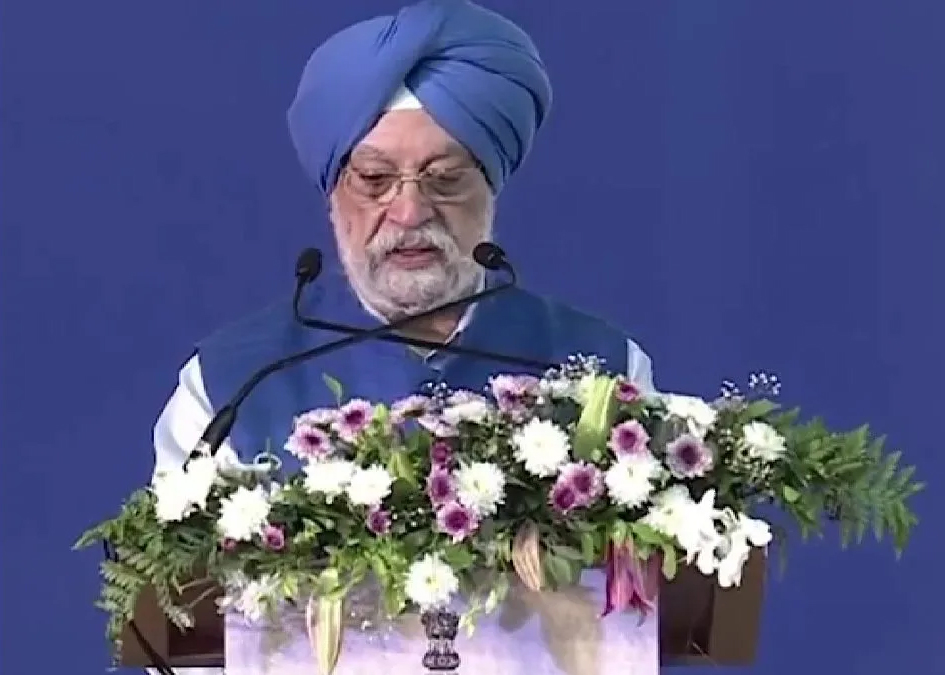
Speaking at the Vibrant Gujarat Regional Conference (VGRC) – South Gujarat held in Surat, Puri described Gujarat as the backbone of India’s energy ecosystem. He said that the state has not only built a strong industrial base but has also created world-class infrastructure that supports the country’s expanding energy needs. Referring specifically to South Gujarat, he noted that the region has become a hub of industrial activity and continues to drive growth across multiple sectors.
The minister pointed out that Gujarat contributes significantly to India’s crude oil refining capacity. With four major refineries operating in the state, the combined annual refining capacity stands at approximately 101.9 million metric tonnes, accounting for nearly 40 per cent of the country’s total. This substantial share underlines Gujarat’s strategic importance in ensuring a steady supply of refined petroleum products across India.
In addition to its refining strength, Gujarat has also established itself as the leading hub for liquefied natural gas imports. The state is home to four LNG terminals with a total handling capacity of around 32.7 million metric tonnes, making it the largest LNG receiving centre in the country. These facilities play a crucial role in meeting India’s growing demand for cleaner fuel alternatives and reducing dependence on traditional fossil fuels.
Puri further highlighted that Gujarat’s energy leadership is supported by an extensive gas pipeline network spanning nearly 4,800 kilometres. This robust infrastructure ensures efficient transportation and distribution of natural gas across industrial, commercial, and domestic sectors. The state also accounts for about 26 per cent of India’s total city gas distribution consumption, reflecting widespread adoption of natural gas as a cleaner and more efficient energy source.
He noted that as India aims to increase the share of natural gas in its overall energy mix, Gujarat has already set a strong example for other states to follow. According to him, the state’s progressive policies, timely investments, and focus on infrastructure development have enabled it to stay ahead in the transition towards a gas-based economy. Describing the “Gujarat Model” as a benchmark for development, Puri said that the state has successfully combined industrial growth with policy innovation. He credited the government’s business-friendly approach and emphasis on ease of doing business for attracting both domestic and international investments. This, he said, has helped Gujarat maintain its position as one of India’s most economically vibrant states. The minister also spoke about India’s future energy roadmap, particularly in the context of sustainability and self-reliance. He pointed out that India’s energy demand is growing at nearly three times the global average, driven by rapid industrialisation, urbanisation, and rising living standards. To address this challenge, the government is focusing on diversifying energy sources and promoting cleaner alternatives. In this regard, Puri highlighted the importance of the National Green Hydrogen Mission, which aims to position India as a global leader in green hydrogen production and exports. He said that this initiative will not only help reduce carbon emissions but also strengthen the country’s energy independence in the long run. Gujarat, with its existing industrial base and infrastructure, is expected to play a key role in advancing this mission. He reiterated that India’s long-term vision is to achieve complete energy self-reliance by 2047, marking 100 years of independence. According to him, states like Gujarat will be instrumental in achieving this goal by continuing to lead in innovation, infrastructure, and policy implementation.
Puri also praised the Gujarat government for organising regional conferences in the run-up to the Vibrant Gujarat Global Summit 2027. He said that such initiatives reflect a forward-looking approach aimed at decentralising development and ensuring that growth opportunities reach every part of the state.
As part of this strategy, the state government has been hosting region-specific events to highlight local strengths and attract targeted investments. These conferences are designed to bring together stakeholders from various sectors and facilitate dialogue on region-specific challenges and opportunities.
The two-day VGRC in Surat saw participation from representatives of six districts of South Gujarat, including stakeholders from industry, agriculture, micro, small and medium enterprises, and the service sector. The event provided a platform for collaboration, knowledge sharing, and policy discussions aimed at boosting regional development.
The primary objective of the conference was to accelerate industrial growth, attract investments, and generate employment opportunities at the local level. By focusing on inclusive and balanced development, the initiative seeks to ensure that the benefits of economic progress are distributed across all regions of the state.

