
























DH NEWS SERVICE
bhaderwah, April 26
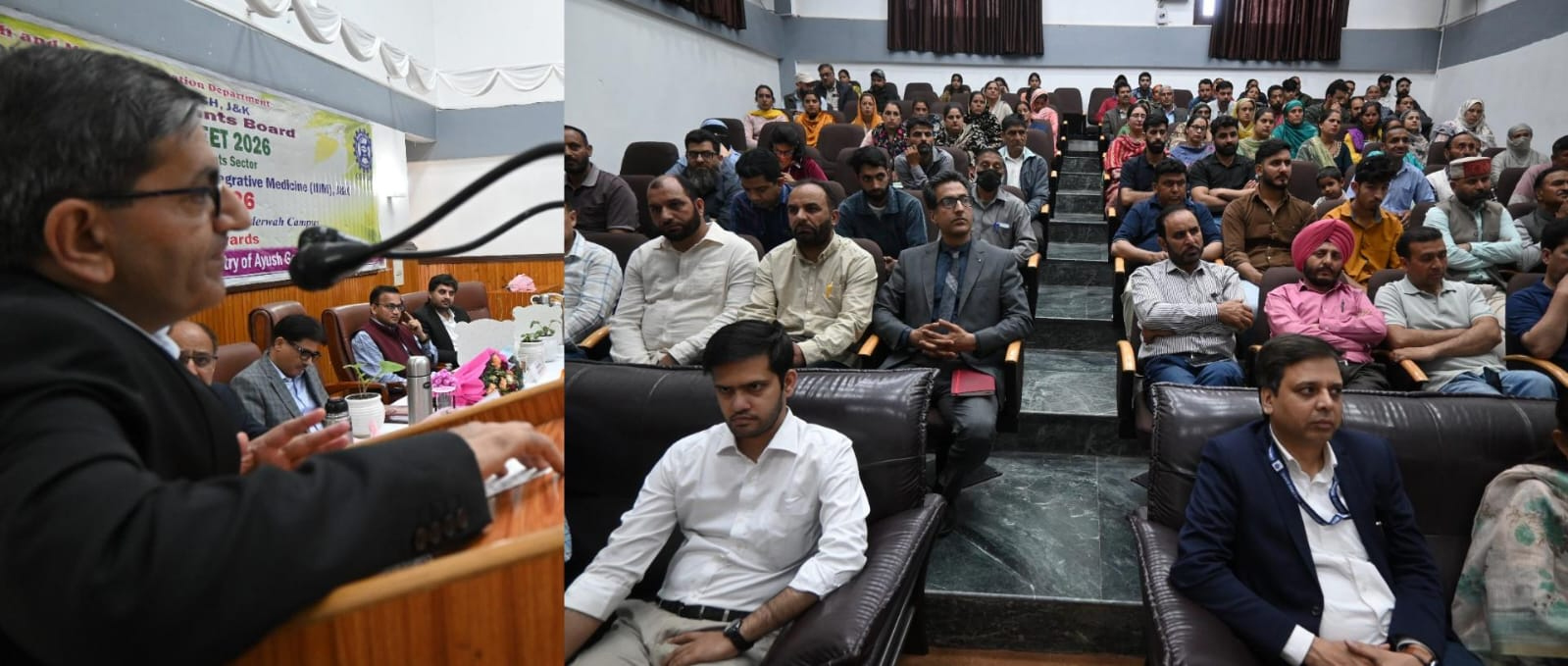
In a major push to strengthen the medicinal and aromatic plants (MAPs) sector in Jammu and Kashmir, the Directorate of Ayush and the J&K Medicinal Plants Board, in collaboration with IIIM (CSIR-J&K), organized a Buyer-Seller Meet in Bhaderwah on Friday. The event, sponsored by the Ministry of Ayush, Government of India, focused on improving supply chains and creating stronger market linkages for farmers and industry stakeholders. The programme saw active participation from farmers, traders, buyers, industry representatives, and officials from various departments, providing a platform for interaction, knowledge sharing, and business opportunities. A major highlight of the event was the signing of six Memorandums of Understanding (MoUs) between farmers and industry stakeholders for the assured supply of raw medicinal plant material. These agreements are expected to formalize market linkages, encourage contract farming, and ensure better returns for growers. Director of Indian Institute of Integrative Medicine (IIIM), CSIR-J&K, Dr Zabeer Ahmed, attended as the chief guest. Other dignitaries present included Deputy Commissioner Doda Krishan Lal, Director Ayush J&K and CEO of J&K Medicinal Plants Board Dr Ajay Kumar Tikoo, Deputy CEO of National Medicinal Plants Board Dr Abdul Qayum, Nodal Coordinator RCFC SKUAST-K Prof Tariq Masoodi, and Marketing Manager NMPB Saurabh Sharma. Addressing the gathering, Dr Zabeer Ahmed stressed the need for stronger coordination between research institutions and government departments to unlock the full potential of the medicinal plants sector. He said scientific cultivation, quality assurance, and effective market integration are essential for sustainable growth. Deputy Commissioner Doda Krishan Lal highlighted the sector’s huge potential for livelihood generation, especially in remote and hilly areas. He called for greater awareness, incentives, and assured market support to encourage farmers to adopt medicinal plant cultivation. In his keynote address, Dr Ajay Kumar Tikoo outlined a market-driven and farmer-centric vision for the sector in Jammu and Kashmir.
He highlighted achievements such as expansion of cultivation areas, promotion of high-value species, establishment of nurseries, and capacity-building programmes for farmers. He said the Buyer-Seller Meet reflects a shift from a subsidy-based approach to a market-led ecosystem where buy-back arrangements, industry partnerships, and value chain development are central to long-term sustainability.
Dr Tikoo also urged farmers to diversify towards high-demand medicinal crops, assuring full institutional support in technical guidance, financial assistance, and market access.
He reaffirmed the commitment of the Directorate of Ayush and the J&K Medicinal Plants Board to making the sector a strong source of sustainable livelihood and economic growth in the Union Territory. Dr Abdul Qayum highlighted various schemes supporting cultivation, post-harvest management, and marketing, while emphasizing the need to strengthen infrastructure like Post Harvest Management Units (PHMUs). Saurabh Sharma stressed demand-driven cultivation, quality standards, and direct market linkages to ensure fair pricing and sustainability, while Prof Tariq Masoodi underlined the importance of scientific cultivation methods and post-harvest practices. Progressive farmers and entrepreneurs were also felicitated for their outstanding contributions to the medicinal plants sector.
Later, the action points in line with the recommendations of Dr. Jitendra Singh, Hon’ble Union Minister and Vice President, Council of Scientific and Industrial Research, made during the last DISHA meeting of Doda were also deliberated upon for their immediate implementation.
Meanwhile, Director Ayush J&K, along with the Ministry of Ayush team, visited the Post Harvest Management Unit of Medicinal Plants at Kotli, Bhaderwah. The event marked a significant step towards strengthening institutional coordination, enhancing market access, and promoting the medicinal plants sector as a sustainable and economically viable livelihood opportunity in Jammu and Kashmir.

