





















DH NEWS SERVICE
Poonch, july 11
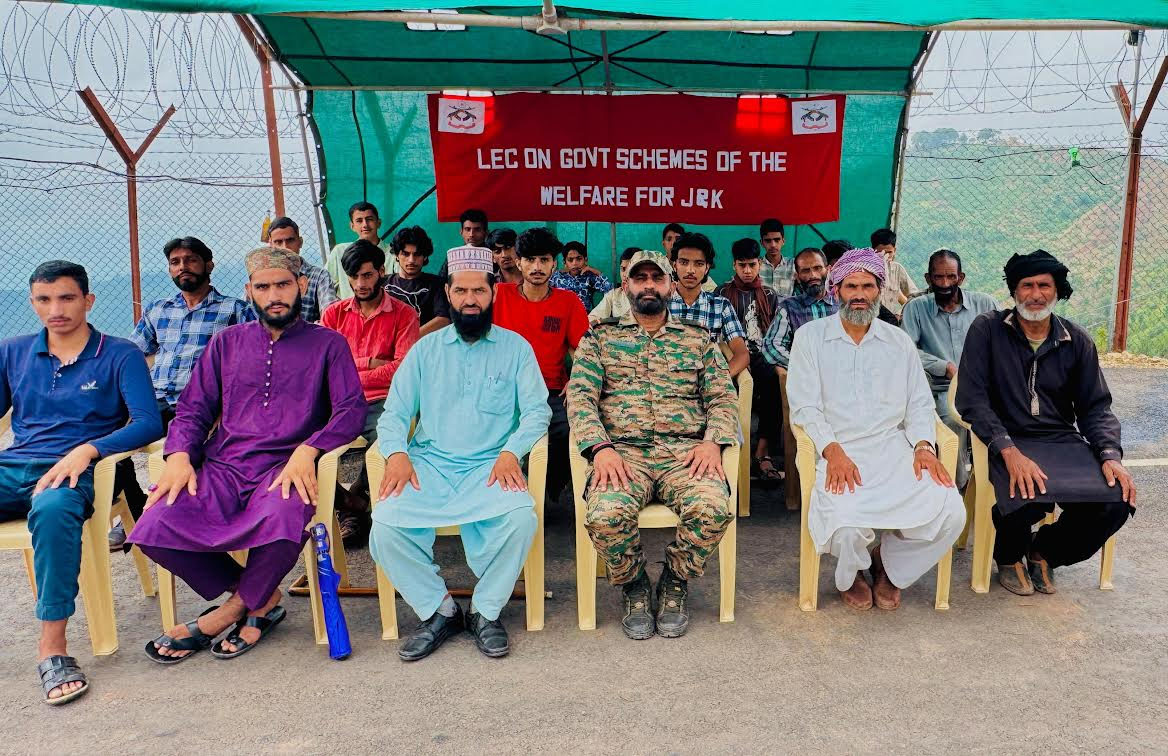
In its continuous efforts to uplift and empower remote communities along the border, the Indian Army organized an informative awareness lecture on various government welfare schemes for the residents of Khanetar village in Poonch district. This initiative forms a vital part of the Army’s outreach activities under its people-centric approach aimed at ensuring inclusive development in border and remote areas of Jammu and Kashmir.
Khanetar, a border village in Poonch, is primarily inhabited by people living below the poverty line. Due to limited exposure and poor connectivity, the residents of such remote areas often remain unaware of the several central and state government welfare programs that have been designed to assist economically weaker sections. Recognizing this gap in awareness and access, the Indian Army took the lead in organizing a comprehensive lecture that would bridge this information divide and encourage the local community to take advantage of the available resources.
The event was organized in close coordination with local panchayat members and saw participation from village elders, women, youth, and key community representatives. The aim was not only to spread awareness but also to build a network of informed individuals who could guide others in their villages to avail themselves of these schemes and services.
During the session, Army personnel and resource persons from local administration educated the attendees about a range of government welfare schemes. These included health-related programs such as vaccination drives and the Ayushman Bharat scheme, which offers financial protection for secondary and tertiary healthcare. Employment and income-generation initiatives like the Pradhan Mantri Employment Generation Programme were also explained in detail to encourage self-reliance among the youth and budding entrepreneurs.
Education and digital literacy were also key themes of the lecture, with schemes like the Sarva Shiksha Abhiyan and the Pradhan Mantri Gramin Digital Saksharta Abhiyan being highlighted for their potential to transform rural education and improve digital access in villages. Pension and insurance schemes such as the Atal Pension Yojana were introduced to help informal sector workers secure their old age. Additionally, agricultural schemes like the Pradhan Mantri Kisan Maan Dhan Yojana and social upliftment programs like the Pradhan Mantri Ujjwala Yojana were shared with villagers, many of whom had never heard of these benefits before.
The lecture was conducted in a simple and engaging manner, with examples and case studies, making it easier for attendees to understand the eligibility criteria, application procedures, and long-term benefits of each scheme. The session also included an interactive segment where villagers could ask questions and clarify doubts about how they could benefit from these programs in real terms.
The initiative was highly appreciated by the locals, who thanked the Indian Army for taking this thoughtful and much-needed step. Several attendees expressed their eagerness to spread the word further in their community and help others navigate the process of applying for government benefits. The local leadership also extended their support and pledged to collaborate in similar future awareness drives.
This outreach effort by the Indian Army not only contributed to raising awareness but also reaffirmed the Army’s role as a trusted pillar of support in the lives of people living in remote and underserved regions. It demonstrated how compassionate action and timely information can act as catalysts for real change and community empowerment.

