













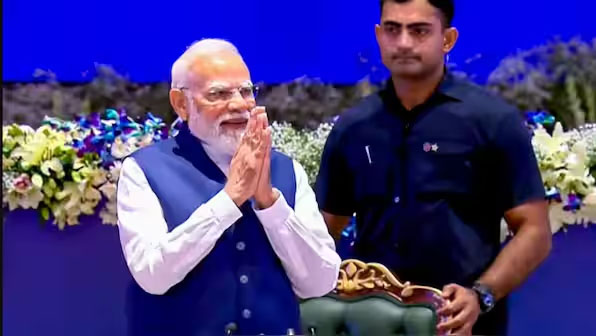
A record can settle a statistic, but it can’t settle a memory. On June 10, 2026, Narendra Modi crossed 4,399 consecutive days in office and passed Jawaharlal Nehru’s 4,398-day record as India’s longest-serving elected prime minister.
That milestone matters, but only up to a point. The larger question is how those 12 years changed the way the world read India, and how Indians, in time, will judge the trade-offs behind the power, pride, welfare, growth, and strain that came with them.
Why the record matters, and why it does not settle the verdict
Long rule gives a leader time to leave deep marks on institutions, habits, and public feeling. It also gives critics time to build a case. That is why 4,399 days is more than a calendar fact, yet less than a final verdict.
Modi’s record is narrow and precise. He has passed Nehru’s continuous elected tenure. Nehru still had a longer total time in office if the pre-election period after Independence is counted. The distinction may sound technical, but it matters because political memory is often built on such details.
Length alone doesn’t decide greatness. It proves durability. It shows an ability to win, to hold a coalition, and to dominate public life. Still, long tenure can also produce fatigue, sharper opposition, and a sense that one leader’s style has become the state’s style. Longevity proves endurance, not agreement
on legacy. Repeated mandates tell a story about voters as much as about Modi. India has held competitive elections at huge scale, across language, caste, class, and region. That fact should not be lost in arguments over personality.
His third term, secured in 2024 through the National Democratic Alliance after the BJP fell short of a solo majority, added another layer to the record. It showed continuing public trust, but it also showed limits. The electorate renewed him, yet it also trimmed his dominance. That mix matters because it keeps the record inside the frame of democracy, not outside it.
How continuity changed the way India was seen from abroad
Foreign capitals now discuss India in a different tone than they did in 2014. The country is no longer treated only as a future market or a slow-moving democracy with unrealized promise. It is read as a state with clearer intent, a stronger diplomatic voice, and more willingness to shape outcomes.
A useful lens comes from around the globe. The views of India and Prime Minister Modi is mostly practical and positive, tied to growth, foreign ties, and outreach to Indians abroad. That perspective matters less as endorsement than as evidence. It shows that even outside India’s own partisan arguments, Modi came to personify a more self-assured India.
The India that Modi projected to the world
Modi’s foreign image rested on more than speeches and summits. It drew force from scale, state capacity, and a repeated message that India would no longer wait for permission to matter. The pitch worked because it matched visible change.
From emerging economy to strategic partner
India spent much of the last decade moving from “important market” to “necessary partner.” Large democracies wanted India in supply chains, in security talks, and in technology partnerships because China had become harder to depend on. New Delhi used that shift well.
The United States, Europe, Canada, Japan, and Australia all widened ties with India.
The Quad gained weight. Electronics manufacturing expanded, helped by policy support and global firms looking for alternatives to China. India’s space success, especially Chandrayaan-3’s moon landing in 2023, added a symbolic layer. The message was plain: India wanted to build, design, and negotiate at a higher level.
Digital public infrastructure as India’s new calling card
If one policy area changed India’s image fastest, it was digital public infrastructure. UPI turned instant payments into an ordinary part of daily life. Aadhaar-linked systems, Jan Dhan bank accounts, and direct benefit transfers showed that a state of India’s size could move money and services at scale. That mattered abroad because other Governments began to study the model. India’s “stack” became shorthand for low-cost public tech that could widen access without waiting for old systems to catch up. For years, India’s story abroad had leaned on private-sector software talent. During the Modi years, it also came to include public digital capacity.
A louder voice in a multipolar world
India’s diplomacy grew sharper and more visible. During its G20 presidency in 2023, New Delhi pushed the African Union’s entry as a permanent member. That move gave India a claim to speak for more than itself.
At the same time, India kept its habit of strategic autonomy. It drew closer to Washington, bought Russian oil, talked climate justice, and refused to fit neatly into any camp. On technology, security, and trade, it argued for room to choose. That posture gave India weight in a world where old blocs no longer explain every decision.
How Indians may remember Modi at home
Domestic memory is never singular in a country this large. PM will be remembered differently in small towns and big cities, in poor households and upper-middle-class homes, in majority communities and among minorities who felt less secure. Still, some themes are already fixed.
The promise of a more efficient state
For many supporters, the Modi years will mean a Government that reached the household more directly. Jan Dhan accounts widened access to banking. Direct benefit transfers cut some layers of leakage. Welfare delivery became more centralized and more visible.
Roads, rural housing, electrification, toilets, and tap-water schemes helped shape the image of a state that could act faster than before. Even critics often concede that the language of delivery changed. Citizens came to expect dashboards, deadlines, and personal branding around public schemes. Whether every promise matched lived reality is a different question, but the idea of a more efficient state took root.
A leader who speaks in symbols as much as policy
Modi’s politics has never been only administrative. It is also theatrical in the old sense of the word, built around gesture, ritual, and repetition. “Mann Ki Baat” created a regular channel into private homes. Temple openings, national anniversaries, and public campaigns gave many supporters a sense that the state was speaking in familiar cultural language.This style strengthened his personal bond with voters. It also changed the emotional texture of power. Under Modi, politics became more presidential without becoming a presidential system. His face carried schemes, victories, warnings, grief, and celebration. That compression of state and leader will matter in historical memory.
The harder questions around nationalism and social change
The same years also sharpened fears about exclusion. Modi’s critics argue that Hindu nationalist politics moved from the margins to the center of state power. They point to minority anxieties, harsher public discourse, and a climate in which dissent could feel more suspect. Supporters answer that national confidence had been too long restrained by elite caution and old forms of secular politics. They see a correction, not a rupture. Yet memory will not ignore the social cost of polarization. For many Indians, the Modi years brought pride. For others, they brought a narrower idea of belonging. Both impressions are now part of the record.
The pandemic, security, and the test of command
Long-serving leaders are often judged less by routine governance than by crisis. Modi faced several such tests, and they hardened both loyalty and criticism.
COVID and the politics of control
The pandemic put state capacity under brutal strain. India’s first lockdown in 2020 was sweeping and sudden. It projected command, but it also exposed the vulnerability of migrant workers and the limits of planning.
Later came a different picture. The CoWIN platform, domestic vaccine production, and the mass rollout of doses showed administrative reach on a huge scale. Free food grain support softened some of the economic blow. Yet the second wave in 2021, with its oxygen shortages and mass grief, remains a wound in public memory. Supporters remember order restored. Critics remember the cost of central control and the dangers of triumphalism before the crisis had passed.
Security doctrine and the new, firmer Indian posture
On security, Modi broke with the older image of Indian restraint. The 2016 surgical strikes after Uri and the 2019 Balakot airstrike after Pulwama signaled a willingness to answer terror attacks across borders. After the Galwan clash in 2020, India hardened its military posture along the China frontier and sped up border infrastructure.
Those actions fed a national story of firmness. They also helped shape India’s external image as a state more willing to impose costs. Critics can question the politics around these moments, or the use of national security in domestic campaigns. Even so, the change in tone is hard to deny.
What legacy will survive the politics of the moment
Modi may not be remembered as a leader of one reform, one war, or one slogan. He is more likely to be remembered as the politician who recast India’s self-image. Under him, India spoke more often in the language of scale, ambition, and national will.
That is a large achievement because self-image has political force.
A country that sees itself as consequential behaves differently abroad and expects more at home. Yet this legacy will remain contested. Indians will argue for years over whether the gains were broad enough, whether power grew too concentrated, and whether democratic habits weakened as the state grew stronger.
The answer will not rest on one speech or one election result. It will rest on how India weighs confidence against inclusion, delivery against dissent, and national purpose against the pluralism that has always made the republic harder to govern and harder to reduce to a single voice.
Modi’s place in Indian memory will be larger than any one policy or campaign. He will likely be remembered as the leader who made India speak to the world with more force, and who made many Indians feel the country’s scale in a new way. Yet memory rarely stays obedient to power. It keeps both praise and grievance. If Modi changed how the world read India, Indians will still decide whether that new reading was generous enough, democratic enough, and built to last.
The writer is a veteran journalist and freelance writer based in Brampton, Canada; Views presented are personal.

