























DH NEWS SERVICE
GANDERBAL, jun 10
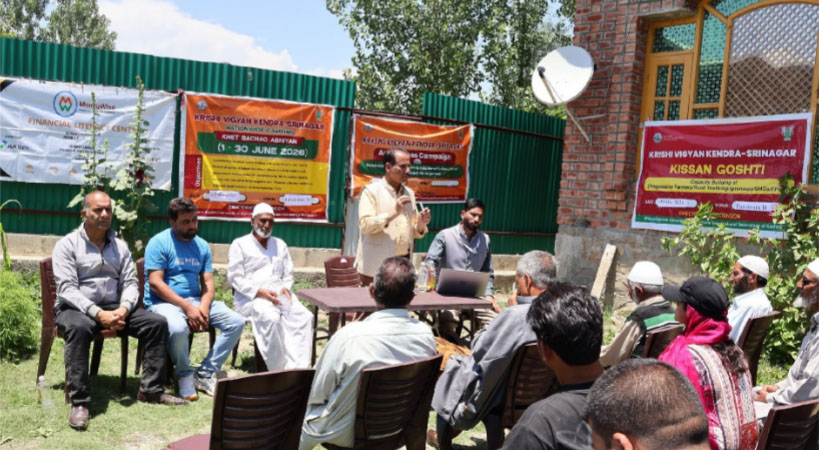
Sher-e-Kashmir University of Agricultural Sciences and Technology of Kashmir (SKUAST-K), Krishi Vigyan Kendra (KVK) Ganderbal, convened its 22nd Scientific Advisory Committee (SAC) meeting on Wednesday at the KVK campus in Shuhama. The meeting brought together senior university officials, scientists, district officers from line departments, agri-entrepreneurs, and progressive farmers to review ongoing agricultural interventions and to plan future strategies for strengthening the farming sector in the district.
The meeting was chaired by Vice Chancellor, SKUAST-K, Professor Nazir Ahmad Ganai, who emphasized the expanding role of Krishi Vigyan Kendras in promoting innovation-driven and region-specific agricultural development.
He underlined the importance of linking scientific research with field-level application to ensure that farmers directly benefit from modern agricultural practices. Interacting with progressive farmers and agri-entrepreneurs, he encouraged them to actively engage in agriculture, agri-entrepreneurship, and post-harvest value addition, highlighting that the sector offers vast opportunities for income generation and employment.
Director Extension, SKUAST-K, Professor Raihana Habib Kanth, also addressed the meeting and stressed the need to transform traditional farming systems into commercially viable and sustainable enterprises. She called upon scientists and extension workers to intensify efforts in skill development programmes and to promote low-cost organic farming solutions suitable for local conditions.
She further advocated the development of specialized training modules that can enhance the technical capacity, productivity, and livelihoods of farmers across the Union Territory.
During the meeting, Dr Ajaz Ahmed Malik, Senior Scientist and Head, KVK Ganderbal, presented a detailed report covering the Action Taken Report, Annual Progress Report, and updates on newly launched initiatives by the centre.
His presentation highlighted the progress made in various extension activities, farmer training programmes, and technology transfer initiatives aimed at improving agricultural productivity and sustainability in the region.
The Vice Chancellor also inaugurated several newly developed facilities at the KVK campus. These included a Food Technology Laboratory designed to support value addition and food processing activities, a High-Density Pear Orchard aimed at demonstrating modern horticulture practices, a Diversified Stone Fruit Block showcasing improved cultivation techniques, and a Cucurbitaceae Crop Cafeteria for field-based crop diversity trials. In addition, the “Sindh Greens” Urban Kitchen Garden initiative was also launched, which aims to promote kitchen gardening practices among urban households and encourage self-sufficiency in fresh vegetable production.
The newly inaugurated facilities are expected to serve as demonstration and training hubs for farmers, students, and agri-entrepreneurs, enabling them to adopt scientific methods and innovative practices in agriculture and horticulture.
Participants at the meeting appreciated the efforts of KVK Ganderbal in bridging the gap between research and farming communities. The discussions also focused on strengthening coordination between scientific institutions and field agencies to ensure better implementation of agricultural development programmes. The meeting concluded with a shared commitment to enhance farmer welfare through innovation, capacity building, and sustainable agricultural practices in the district.

