






















By Col Dev Anand Lohamaror
jammu, july 30
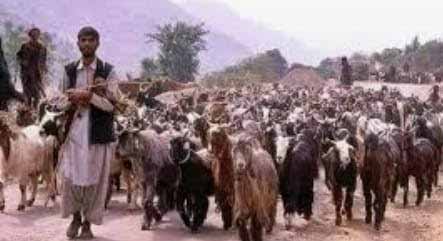
In the hills, forests, and borders of Jammu and Kashmir, there exists a community that is not only the ancient guardian of this land but also a living example of India’s diversity and inclusivity—the Gujjar-Bakarwal community. For generations, they have practiced pastoralism in the forests, lived near the borders, and maintained environmental balance, all while fulfilling their role to the nation without any demands or protests. The War Memorial in Mad, known as “Awam and Jawan,” bears witness to the sacrifices and bravery of 37 Gujjar-Bakarwals during Operation Sarp Avinash.
The Gujjar-Bakarwal community’s patriotism is not limited to military cooperation and sacrifice; they have also fully supported the Indian government in every democratic and social initiative. When the Indian government made the historic decision to abrogate Article 370 and bring Jammu and Kashmir into the mainstream on August 5, 2019, this community welcomed it unanimously. At a time when there was confusion and opposition in many parts of the Kashmir Valley, the Gujjar-Bakarwals clearly stated that this step would bring equality, development, and stability to the state.
The biggest crisis facing the Gujjar-Bakarwal community is that they have neither a permanent settlement nor an identity. Since they live in different places at different times of the year, their names are often left out of voter lists. During Panchayat or DDC elections, they are on their transit routes and are deprived of voting. This is why their representation in Panchayats and District Councils remains nominal. Politically, they rely on a few leaders who are tied to mainstream parties and either remain silent on community issues or do not go beyond their party line.
The nomadic lifestyle renders the benefits of reservation ineffective. The Gujjar-Bakarwal community in Jammu and Kashmir has received Scheduled Tribe (ST) reservation, but this benefit will not be practically available to them for the next two decades. The main reason is their traditional nomadic lifestyle, which involves migration according to the seasons. This constant migration disrupts their children’s schooling, preventing them from benefiting from competitive exams or higher education opportunities.
Despite being a nationalist pillar of Jammu and Kashmir, the Gujjar-Bakarwal community today struggles not only with negligible representation in the government system but is also a victim of planned harassment and administrative neglect. A tragic and concerning example of this came to light on February 13, 2025, when three members of a family belonging to Mohd Sadiq Bazar were brutally murdered near Qazigund.
Even months later, neither have the perpetrators been identified nor have any arrests been made, clearly indicating the system’s deep failure and apathy.
The Gujjar-Bakarwal community, despite being a nationalist pillar of Jammu and Kashmir, is today pushed to the margins. It is necessary for the government not to stop at declarations but to develop a clear timeline, monitoring system, and accountable mechanism to implement these rights.
Until the children of this community are deprived of education, women live without health services, and men live in fear of the police and administration, the vision of a ‘Developed India’ will remain incomplete.

