















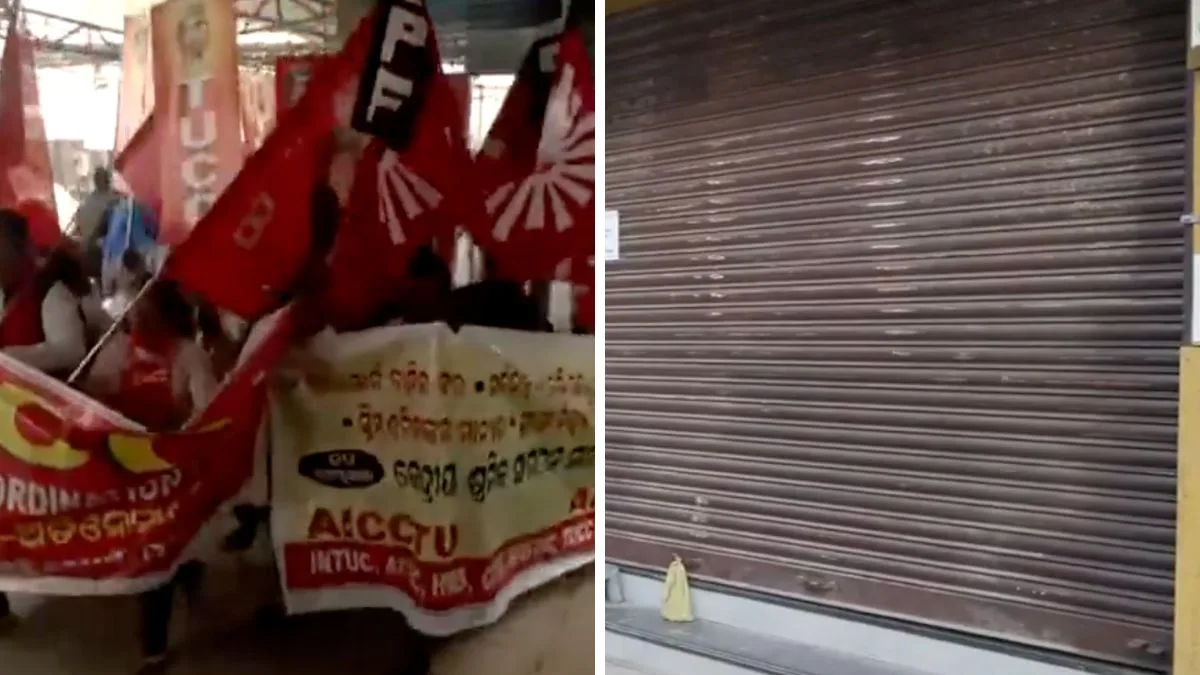
NEW DELHI, Feb 12
A24-hour nationwide strike, widely referred to as Bharat Bandh, disrupted transport, banking, and public services across several states on Thursday (February 12, 2026), with Kerala witnessing the sharpest impact. The protest has been organised by 10 central trade unions, including the All India Trade Union Congress (AITUC) and the Centre of Indian Trade Unions (CITU).
Amid the shutdown, Congress leader Rahul Gandhi extended support to the agitation, saying he stands firmly with workers and farmers protesting the Centre’s labour and economic policies.
Trade unions called the protest to press the Union government to withdraw the four labour codes and roll back other policy decisions.
Union leaders claim participation across nearly 600 districts and say close to 30 crore workers are part of the agitation.
From midnight, buses went off roads in Kerala, shops downed shutters, and offices reported thin attendance. In Tamil Nadu, banking and sections of public services faced disruption.
West Bengal and Odisha also saw participation as unions responded to the strike call. Essential services were exempted.
Is today a Bharat Bandh? What to know about the February 12 strike
Yes. Trade unions observed a 24-hour nationwide strike on February 12, commonly described as Bharat Bandh, against labour reforms and other policy measures.
The impact varies across states and sectors, with hospitals, ambulance services and other essential operations kept outside the strike.
Rahul Gandhi on Bharat Bandh: ‘Stand firmly with issues and struggles of workers, farmers’
Taking to social media platform X, Rahul Gandhi wrote, “Today, lakhs of laborers and farmers across the country are on the streets to raise their voice for their rights.
Workers fear that the four labor codes will weaken their rights. Farmers fear that the trade agreement will hurt their livelihoods.”
He further warned that weakening or eliminating the Mahatma Gandhi National Rural Employment Guarantee Act (MNREGA) could take away the last support system for villages.
“And weakening or eliminating MNREGA could take away the last support of the villages. When decisions were made about their future, their voices were ignored. Will Modiji listen now? Or does someone have a very strong grip on him? I stand firmly with the issues and struggles of the workers and farmers,” Gandhi said.
Kerala bandh today: Transport paralysed, commercial activity hit
Kerala came close to a standstill as Kerala State Road Transport Corporation (KSRTC) buses remained off the roads in most depots. Private buses, taxis, and autorickshaws also stayed off duty, leaving major cities, including Kochi, Thiruvananthapuram, and Kozhikode, largely deserted.
Banks and government offices either remained closed or functioned with skeletal staff. Schools and colleges suspended classes in view of commuting difficulties, and some examinations were postponed.
Markets and small industries shut operations, and sections of the plantation and industrial workforce joined the protest. The Karunya Plus lottery draw scheduled for February 12 was postponed due to logistical constraints.
The Kerala government declared the day as “dies non” for state employees, warning that unauthorised absence would result in loss of pay. Leave was permitted only under specific categories, and department heads were directed to ensure protection for those reporting to duty.
Hospitals, fire and rescue services, milk distribution, pharmacies, and newspaper circulation functioned normally. Arrangements were made to ensure the movement of pilgrims to Sabarimala, and participants attending the Maramon Convention were not obstructed.
Tamil Nadu strike on Feb 12: Banking and public services affected; TNSTC warns staff
In Tamil Nadu, trade unions joined the nationwide strike, raising the possibility of disruptions in banking, insurance and sections of transport services.
The ruling DMK’s trade union wing, the Workers Progressive Association (WPA), extended support. Farmer groups under the Joint Kisan Morcha and several student organisations also backed the agitation.
Protesters demanded withdrawal of the four labour codes, halting amendments to the Electricity Act, ensuring a five-day work week for bank employees, stopping privatisation of public sector undertakings and opposing changes to rural employment schemes.
The Tamil Nadu State Transport Corporation (TNSTC) directed staff to report for duty, cancelled sanctioned leave and warned of strict disciplinary action against those who abstain or disrupt services. Educational institutions, IT companies and most private offices were expected to function as usual.
West Bengal bandh: Strike observed in Kolkata
In West Bengal, a nationwide strike was observed in response to the call by several trade unions protesting the policies of the central government. Visuals emerged from several locations in Kolkata as unions participated in the agitation.
Odisha bandh: Trade unions participate in Bhubaneswar
In Bhubaneswar, the Trade Union Co-Ordination Centre, Odisha State Committee, participated in the nationwide strike called against various policies of the central government.
Bharat bandh trade unions strike protest: Key demands explained
Trade unions have positioned the protest as opposition to labour reforms and other policy decisions. Among the principal demands are withdrawal of the four labour codes, halting amendments to the Electricity Act, opposing privatisation of public sector undertakings, a five-day banking work week and objections to changes in employment guarantee schemes.

