























NEW DELHI, Feb 3
Trump is keen on India switching out Russian and Iranian oil imports with Venezuelan oil purchases. Here’s what that means for India.
Trump wants India to double down on Venezuelan oil imports.
India became one of the top buyers of “discounted” Russian crude oil following the outbreak of the Ukraine war in 2022. Russia stood tall as a primary source of oil imports for India, especially with previous sanctions targeting Iranian and Venezuelan oil.
As per Reuters, Russian oil made for about 36% of India’s total crude imports in the fiscal year 2024-25. However, New Delhi’s demand for affordable oil has repeatedly been thwarted with the onset of US President Donald Trump’s second term.
The American leader’s continuous back-and-forth on decisions tied to global oil flow have significantly impacted the South Asian country. Trump’s oil-focussed diplomacy has fuelled his bombshell, headline-making admissions about where India should buy crude from.
“They’re going to be buying Venezuelan oil, as opposed to buying it from Iran,” Trump told reporters on an Air Force One flight. A previous report by Reuters, firmly citing sources familiar with the matter, established that the Trump admin had told Delhi to resume its purchase of Venezuelan oil to abandon its Russian crude imports.
As Trump pushes his own oil agenda for India in a post-Nicolas Maduro Venezuela era, one can’t help but wonder if Venezuelan crude could ever be a meaningful addition to the crude oil flows to India.
Tariffs and India’s oil imports
India’s oil trade with these countries have altered drastically in the past few decades, a graph majorly fuelled by US sanctions. In the early 2000s, Iran emerged as one of India’s top oil suppliers, with purchases hitting $12.3 billion in 2018-19, accounting for nearly 9% of India’s total oil imports at the time.
These numbers ultimately plummeted in light of sanctions being imposed and US-granted waivers on oil purchases expiring in 2019.
Thereafter, India turned to Russia for supplies as the 2022 Ukraine invasion triggered a wave of Western sanctions on Russian energy exports. Moscow’s limited export options in the West led to discounted oil prices in India. However, even those ties have been under the scanner with the Trump admin calling out India (and China) as the top funders of the Russian “war machine” against Ukraine.
In March 2025, the Trump admin signed an executive order imposing a tariff of 25% on countries importing Venezuelan oil. With the US removing Venezuela’s ex-President Maduro from power in January, Trump said the country will turn over between 30 million and 50 million barrels of sanctioned oil to the US to be sold at market prices.
The move has potentially signalled the return of an old oil player on India’s crude flow imports chart.
India’s Venezuelan oil connection
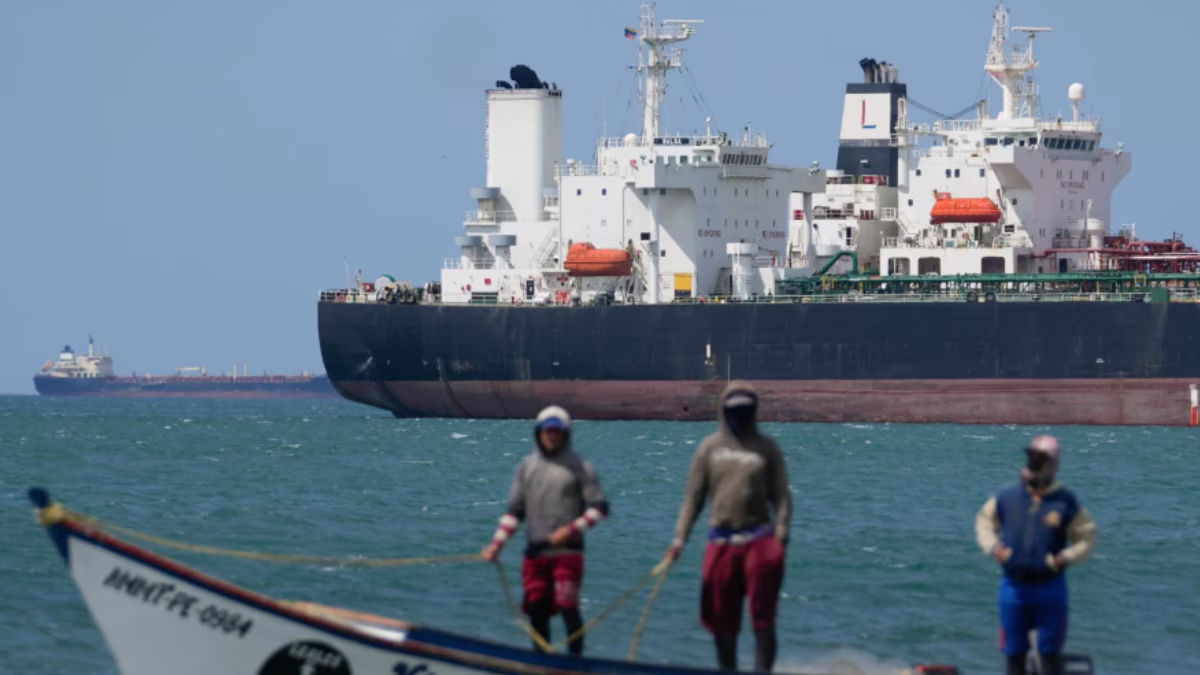
While Venezuelan oil hasn’t exactly mattered to India’s oil import in the past few years, the situation was quite different a decade ago. New Delhi was importing close to $13 billion worth of Venezuelan crude in 2013.
By 2024, the numbers drastically fell to $255 million worth of all oil from the South American country, making for roughly 0.3% of India’s oil imports, as per Definedge Securities.
According to S&P Global, Reliance was a leading buyer of Venezuelan crude in India.
In light of Trump’s new stand on Venezuelan oil exports, Reliance Industries Ltd has again voiced its interests in purchasing the crude, as per an announcement made late Jan 8. “We await clarity on access for Venezuelan oil by non-US buyers and will consider buying the oil in a compliant manner,” a company spokesperson said, as per S&P Global.
“The developments in Venezuela offer three potential outcomes for Indian players. It offers a pathway for India to further diversify its crude sources and increase the heavy crude purchases to replace or supplement other heavy crude purchases,” said Tushar Bansal, senior director at consulting agency Alvarez and Marsal, as per S&P Global.
“It offers a pathway for ONGC and other upstream partners to realize their long-stuck dividends as well as monetize their stakes. And lastly, expected upstream developments in Venezuela could offer an exciting prospect for Indian players to increase stake and production in the medium to long term and provide energy security to the country.”
Indian refiners such as Merey-16 and Hamaca import typically heavy grades of Venezuelan crude, consisting of high sulfur and asphaltene content, which, in turn, results in a higher percentage of residue.
Benjamin Tang, head of liquid bulk at S$P Global Commodities at Sea (CAS) added, “If the Venezuelan crude opportunity opens up, then Reliance could reintroduce Venezuelan grades like Merey-16 to its crude mix. It will compete directly with alternatives, such as Iraqi Basrah Heavy and Canadian Cold Lake.”

