






















new delhi, Aug 20
Experts agreed that there is an urgent need to curb the increasing efforts of neighboring countries like China and Pakistan to break into India’s cybersecurity. Experts agreed that India needs to rapidly develop a secure digital infrastructure to counter the offensive strategy of China and Pakistan. These suggestions were made by experts here on Wednesday, the third and last day of the three-day seminar going on at the Uttar Pradesh Institute of Forensic Sciences (UPSIFS).
Panel discussions were organized on many topics, ranging from cyber security to the advancement of forensic science, in which issues like genome mapping, creation of a genetic database, AI, and entrepreneurship were prominent.
At the same time, in the field of forensics, emphasis was laid on providing justice and help to the victims as well as punishing the culprits through the use of artificial intelligence and future-based technologies.
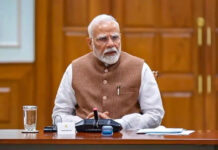
Participating in the panel discussion on Wednesday, Maharashtra’s Chief Secretary Brajesh Singh discussed the global scenario of cyber threats and policing. He said that today a small change in the world can bring a huge impact. Hezbollah pager attack is an example of this. He said that cyber kill chain is like Raktbeej.
“India’s largest port, GNPT, was not able to operate for 3 months due to a malware. This was an example of a cyber kill chain. Cyber crime infrastructure can only be broken through global efforts,” he said.
Brajesh Singh said that it is necessary to map the crisis in real time. Once the danger is sensed, there is a need to mark the evidence and secure it. The chain of custody of cyber cases also works like forensics. He said that in the next stage, a money cutoff becomes necessary. In this, there is a need to work on all facts including wallet, blockchain, and digital money. In the next phase, the criminal infrastructure needs to be seized. Praising the cyber security framework of RBI, he stressed that India will have to focus on digital sovereignty, which will help in solving cases.
Australian cyber expert Robbie Abraham joined the panel discussion through a virtual medium and gave information about the changing process of hacking. He said that earlier techniques like programming, scripting, OS, networking protocol, and shellcode writing were used.
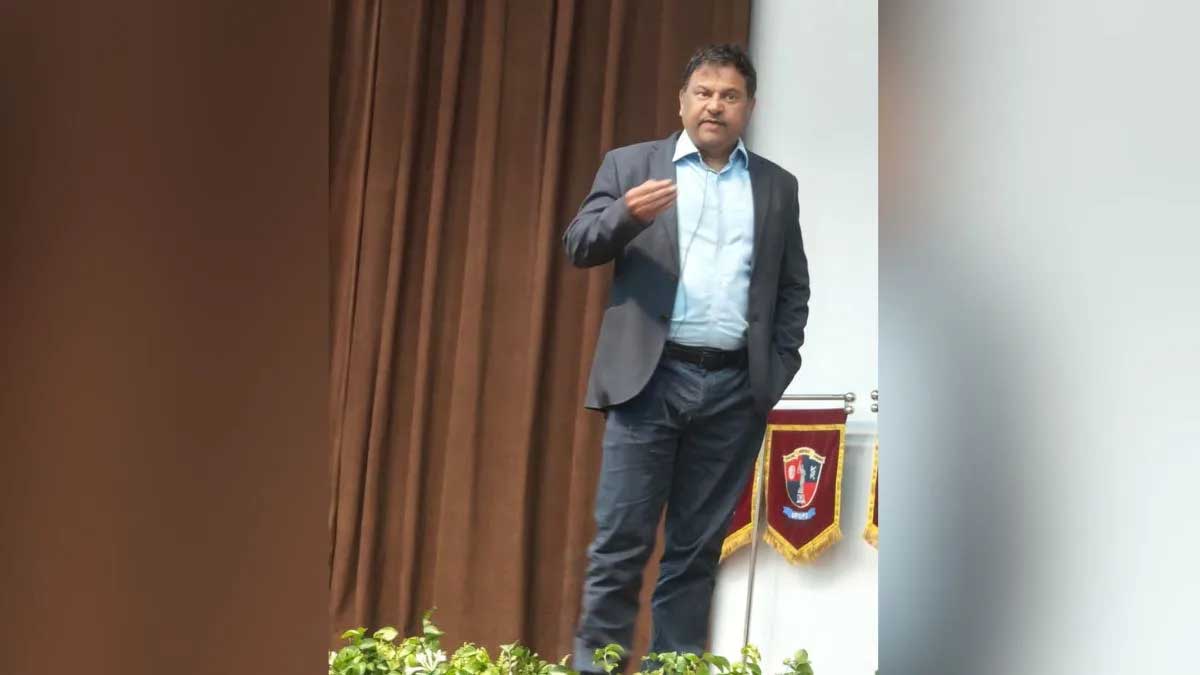
Giving information about various malware, he said that a student from the Philippines had created the I Love You worm, which was circulated through email, causing a loss of 8.7 billion US dollars to the world. Giving the example of the Nirbhaya and Gudiya rape cases, Australian cyber expert Shantanu Bhattacharya gave information about the complex process of mixed DNA analysis and said that pattern recognition and efficiency are promoted through advanced algorithms. This makes it easier to solve the case and helps in accurate profile separation.
AI helps in understanding the micro pattern, which helps in differentiating the DNA of the victim and the accused.
On the other hand, Dr Madhusudan Reddy Nandineni, Staff Scientist and Group Head, Centre for DNA Fingerprinting Diagnostics (UPPAL), Hyderabad, gave information about Next Generation Sequencing, Rapid DNA Technology, Miniature and Portable Devices. While the Executive Director of Project 39A of NALSAR, Hyderabad, emphasized that only the methods developed in police labs should not be considered forensic science.

