





















DH NEWS SERVICE
NEW DELHI, july 23
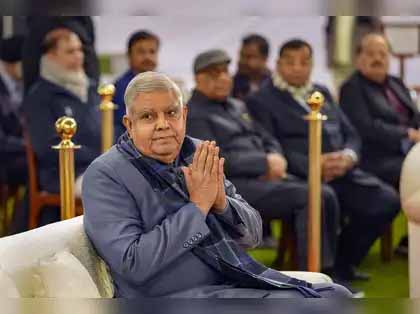
In a surprising political development, Vice President Jagdeep Dhankhar tendered his resignation on Monday, sparking a flurry of speculation regarding his successor. While India has had 14 Vice Presidents since 1950, none of them have been women. This vacancy opens up the possibility of a historic first: the appointment of the country’s first woman Vice President.
India has witnessed female leadership in other top constitutional roles before. Indira Gandhi was the nation’s first and only woman Prime Minister, while Pratibha Patil and the incumbent President Droupadi Murmu have held the highest office in the land. However, the Vice President’s office, which also serves as the ex-officio Chairperson of the Rajya Sabha, has never been occupied by a woman.
With the ruling Bharatiya Janata Party (BJP) in a strong position, political analysts are closely watching whether Prime Minister Narendra Modi will make another symbolic and transformative appointment. When the BJP nominated Droupadi Murmu as President in 2022, she became the first tribal person and the second woman to assume the role. If the BJP now nominates a woman for the Vice President’s office, it would not only be a historic first for the post but also mark the first time that both the President and Vice President of India are women.
Among the top female contenders is Vasundhara Raje, a two-time Chief Minister of Rajasthan. Despite stepping down from the CM post, Raje remains one of the BJP’s most prominent leaders in Rajasthan and continues to command significant political capital. Her experience, influence within the party, and royal lineage could make her a strong consensus candidate.
Another strong name being floated is Finance Minister Nirmala Sitharaman. Since assuming charge of the Finance Ministry in 2019, Sitharaman has been one of the most visible and powerful figures in the Modi cabinet. She was widely credited with steering India through the economic fallout of the COVID-19 pandemic and laying down reforms that helped the country rise to become the world’s fourth-largest economy. Her technocratic expertise, political acumen, and loyalty to the Prime Minister make her a serious contender. If selected, she would be the first Union Finance Minister to transition directly into the Vice President’s office.
Also in the mix is Sudha Murthy, who was nominated to the Rajya Sabha in 2024. A prolific writer, philanthropist, and chairperson of the Infosys Foundation, Murthy enjoys immense respect across political and social spectrums. Her nomination to the Upper House was seen as a recognition of women’s empowerment, or Nari Shakti, with Prime Minister Modi calling her appointment a “powerful testament” to the role of women in nation-building. At 73, Murthy’s image as an apolitical and socially impactful figure may appeal to the BJP’s narrative of inclusive governance.
However, the race is far from limited to women. Several male contenders are also being considered for the high constitutional post. Harivansh Singh, the current Deputy Chairman of the Rajya Sabha and a respected journalist-turned-politician, is seen as a natural successor with prior experience in managing parliamentary proceedings.
Another high-profile name in circulation is Bihar Chief Minister Nitish Kumar. Having declared that he will not contest the upcoming assembly elections, his political future is currently uncertain. As a seasoned administrator and former NDA ally, his appointment could be used to forge new alliances or reinforce old ones.
With JP Nadda, the current BJP National President, nearing the end of his term, political observers speculate that the party might reward him with the Vice President’s office in recognition of his organizational leadership during multiple election cycles.
Interestingly, Congress MP Shashi Tharoor has also emerged as a surprise mention. Having had recent tensions with his party’s leadership, his potential nomination by the BJP is being seen as a strategic move to divide the opposition and project a more inclusive political approach.
Other notable names being discussed include former Chief Justice of India DY Chandrachud, former Kerala Governor Arif Mohammad Khan, Jammu & Kashmir Lieutenant Governor Manoj Sinha, and Delhi LG Vinai Kumar Saxena. Each of them brings distinct administrative and legal experience that would be well-suited to the constitutional responsibilities of the Vice President.
As political consultations intensify and lobbying grows behind the scenes, all eyes are on the BJP’s eventual pick. Will the party create history by naming India’s first woman Vice President? Or will it opt for a seasoned male politician or technocrat to maintain political balance?
What remains certain is that the appointment will carry significant symbolic and political weight, especially as the country looks ahead to the 2029 general elections. If the party chooses to elevate a woman to this high office, it would further cement its narrative of empowering women and upholding constitutional values, potentially leaving a lasting legacy.

